
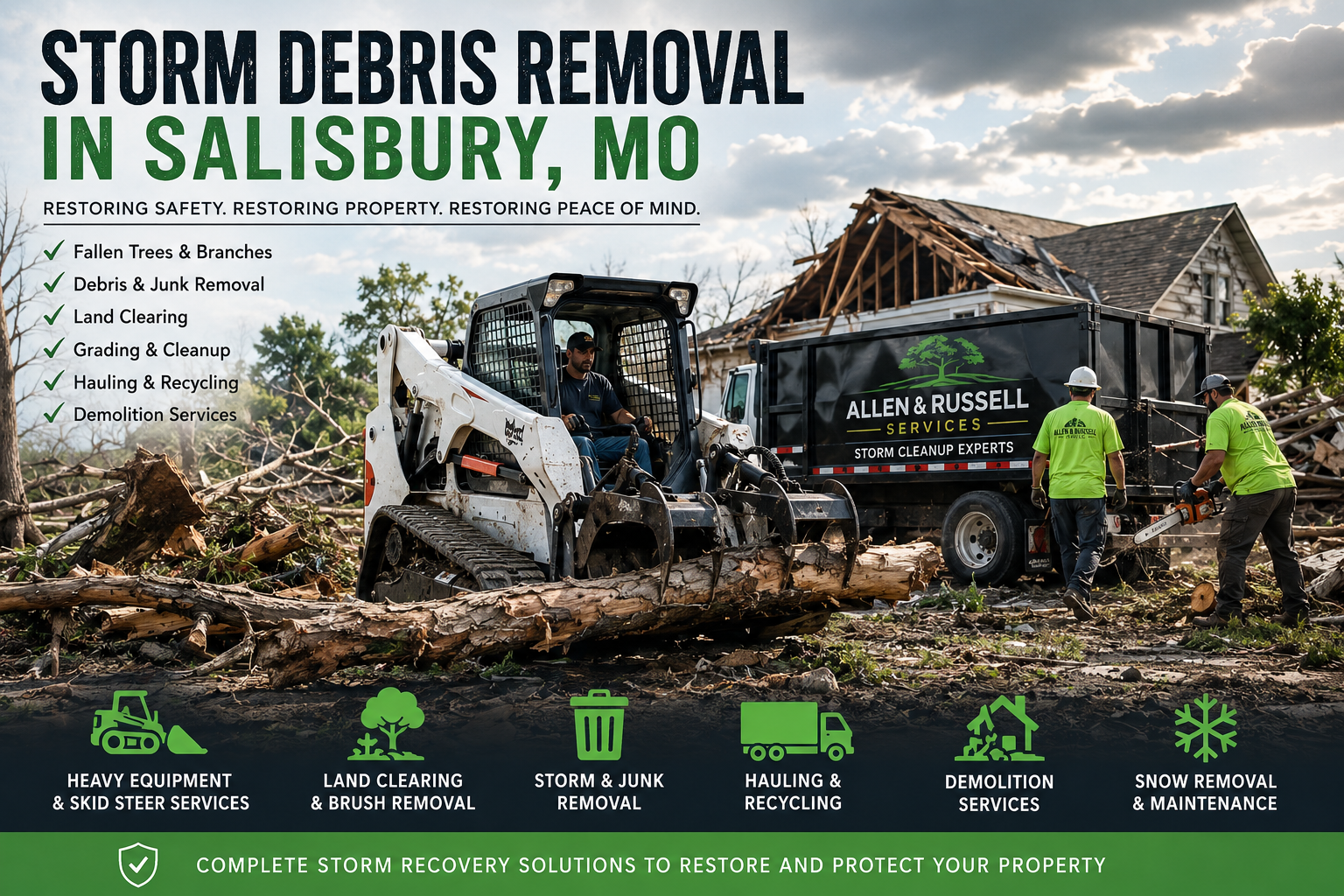
Severe storms can cause widespread destruction across residential, agricultural, and commercial properties in Salisbury, MO. High winds, heavy rainfall, and sudden weather changes often leave behind fallen trees, broken structures, scattered debris, flooded areas, and unsafe ground conditions. In many cases, the damage is not only visible but also hidden beneath soil, vegetation, and water-affected surfaces.
Recovering from such conditions requires more than simple cleaning. It demands a structured storm recovery approach that focuses on safety, efficiency, and long-term land restoration. Choosing the right storm debris removal process ensures that a property is not only cleaned but fully stabilized for future use.
Storm recovery typically involves multiple stages including heavy debris removal, land clearing, grading, hauling, recycling, and structural demolition. Each stage must be completed in sequence to ensure proper restoration and avoid long-term issues such as erosion, drainage failure, or structural instability.
Understanding the True Impact of Storm Damage
Storm damage is rarely limited to surface-level mess. A single storm event can affect multiple layers of a property simultaneously. Trees may fall across driveways or buildings, soil may shift due to water saturation, and underground drainage systems may become blocked or damaged.
In rural areas like Salisbury, MO, where properties often include large open land and wooded sections, storm damage can spread quickly and affect wide areas. This makes cleanup more complex because access routes are often blocked and heavy debris is scattered across multiple zones.
One of the biggest challenges after a storm is handling large, heavy materials such as fallen tree trunks, broken roofing sheets, fencing debris, and damaged construction materials. These cannot be safely removed using manual labor alone.
This is where equipment-based support becomes essential. Heavy machinery is required to lift, push, and transport large debris without causing further damage to the land or risking human safety.
Role of Heavy Equipment in Storm Cleanup
Efficient storm cleanup depends heavily on the use of specialized equipment. Without proper machinery, cleanup becomes slow, unsafe, and incomplete. Large debris piles can block access points and prevent further restoration work.
One of the most important tools in this process is machinery used in Skid Steer Services These machines are highly versatile and capable of operating in tight spaces while handling heavy loads. They are commonly used for removing fallen trees, clearing debris piles, leveling ground, and transporting waste materials.
Skid steer equipment significantly reduces cleanup time and allows workers to restore access to damaged areas quickly. This is especially important when storm damage affects driveways, entrances, or essential property pathways.
Importance of Professional Storm Cleanup Planning
Storm recovery is not just a physical task but also a planning process. Without proper assessment, cleanup efforts can miss hidden hazards or fail to address deeper structural issues.
Many property owners underestimate the complexity of storm damage and attempt partial cleanup without professional support. While this may remove visible debris, it often leaves behind hidden risks such as unstable soil, buried waste, or damaged drainage systems.
A complete recovery plan ensures that all aspects of damage are addressed systematically. This includes identifying hazards, prioritizing high-risk areas, and using appropriate tools and methods for each stage of cleanup.
Professional Storm & Junk Removal Services play a key role in this process by handling both natural storm debris and general waste materials displaced during the storm. This combined approach ensures that the entire property is cleared rather than just partially cleaned.
Vegetation Damage and Land Blockage Issues
One of the most common consequences of storms is widespread vegetation damage. Trees may be uprooted, branches may break, and thick brush can collapse across land areas. In many cases, entire sections of property become inaccessible due to fallen vegetation.
This creates a major obstacle for further cleanup operations because blocked access prevents machinery and workers from reaching affected areas.
To restore accessibility, full vegetation clearing is required. This process involves removing fallen trees, cutting damaged brush, and clearing obstructed pathways.
Land Clearing and Brush Removal Services are used to handle this stage of recovery. These services ensure that overgrown or storm-damaged vegetation is completely removed, allowing safe and open access to the property.
Clearing vegetation also helps reduce long-term risks such as pest infestation, mold growth, and fire hazards caused by dry or decaying organic matter.
Transition from Vegetation Clearing to Debris Removal
Once vegetation is cleared and access is restored, the next phase focuses on removing remaining storm debris scattered across the property. This includes broken structural materials, mixed waste, and hazardous remnants left behind after the storm.
Storm debris can vary widely depending on the severity of the weather event. It may include wood fragments, metal sheets, glass, insulation materials, and household waste displaced by wind or flooding.
Proper handling is critical at this stage because many debris materials can be sharp, unstable, or contaminated.
Storm Debris Removal Services ensure that all storm-related waste is safely collected, transported, and disposed of according to safety and environmental standards. This step is essential for making the property safe for further restoration work.
Preparing for Land Restoration
After major debris removal is completed, attention shifts toward restoring the physical condition of the land. Storms often leave soil uneven, compacted, or eroded due to heavy water flow and impact from falling objects.
Before any rebuilding or structural work can begin, the land must be stabilized and reshaped. This includes leveling uneven surfaces, improving drainage flow, and repairing damaged soil structure.
Proper planning at this stage ensures that future construction or land use is safe and sustainable.
Ground Instability After Storm Events
Once vegetation and major debris are removed the real condition of the land becomes visible Storms often disturb soil layers create uneven surfaces and damage natural drainage patterns This can lead to water pooling erosion and long-term structural risks if not corrected early
Restoring land stability is not optional it is a critical step before any rebuilding or redevelopment can take place A properly restored surface ensures that future construction is safe durable and resistant to weather-related damage
Land Leveling and Soil Restoration
Storm-affected ground often becomes uneven due to flooding heavy impact from debris and soil displacement This uneven terrain can make the land unsafe for movement vehicles and construction activity
Restoration requires reshaping the soil correcting elevation differences and ensuring proper water flow direction These corrections help prevent future flooding and foundation damage
Professional Dirt Work and Grading Services are used to stabilize the surface improve drainage and restore structural balance to the land This step is essential for transforming damaged ground into usable property again
Rebuilding Access Routes and Functional Surfaces
Storm damage frequently affects driveways entry paths and working pads These areas are essential for transporting equipment vehicles and materials across the property When they are damaged the entire site becomes difficult to access and manage
Restoring these surfaces requires compacting soil rebuilding structure and ensuring long-term durability A stable access route is necessary for both safety and functionality during recovery and future use
Driveway And Pad Construction Services provide strong reinforced surfaces that support heavy loads and ensure smooth access across the property even after severe weather conditions
Full Site Cleanup Beyond Visible Debris
After major storm cleanup there is often smaller debris left behind that is not immediately visible This includes broken fragments mixed waste and scattered materials that can create safety hazards over time
A complete cleanup process ensures that no residual waste remains on the property This improves safety reduces pest risks and restores overall cleanliness
Property Maintenance And Cleanup Services help maintain long-term site cleanliness by handling leftover materials and ensuring the property remains in usable condition after storm recovery
Managing Large Volume Waste After Storms
Storms generate large amounts of mixed waste including wood metal broken furniture roofing materials and natural debris Handling this volume requires proper collection loading and transportation systems
Without structured waste removal cleanup efforts can become slow and inefficient leading to delays in full recovery
Efficient transport systems are essential to keep the site clear and allow other restoration work to continue smoothly
Junk hauling Services handle large scale debris removal ensuring all unwanted materials are safely transported away from the property and disposed of properly
Recycling and Sustainable Cleanup Practices
Not all storm debris is waste Many materials such as metal fencing roofing sheets and structural components can be recovered and reused Proper separation of recyclable materials reduces environmental impact and supports sustainable recovery practices
Recycling also reduces landfill pressure and helps improve overall efficiency of cleanup operations by turning waste into reusable resources
Scrap Metal and Junk Removal Services focus on separating valuable recyclable materials from general debris ensuring responsible disposal and resource recovery during storm cleanup
Seasonal Impact After Storm Recovery
Even after storm cleanup is complete properties remain exposed to seasonal weather challenges Cold temperatures snow and ice can create new risks especially on damaged or uneven surfaces If not managed properly these conditions can lead to accidents and further property damage
Maintaining accessibility during winter months becomes an important part of long-term property care
Snow Removal Services ensure that roads driveways and open areas remain clear and safe during snow conditions allowing continuous access and usability throughout the year
Severe Structural Damage and Removal Needs
In some storm situations buildings or structures become too damaged to repair These unsafe structures can block recovery efforts and pose serious safety risks if left in place
Removing damaged structures allows the land to be fully restored and repurposed for future use Controlled demolition ensures that removal is done safely without causing additional damage to surrounding areas
Demolition Services provide safe dismantling of unstable structures clearing the way for rebuilding and redevelopment after severe storm damage
Long-Term Property Recovery Strategy
After completing debris removal land clearing and ground restoration the final phase of storm recovery focuses on long-term stability and property readiness This stage ensures that the site does not face recurring issues from the same storm damage and remains safe for future use or construction activities
A proper recovery strategy looks beyond immediate cleanup and focuses on durability soil strength drainage performance and structural safety across the entire property
Ensuring Drainage and Soil Stability
One of the most overlooked effects of storm damage is long-term soil instability Heavy rainfall and flooding can permanently alter water flow patterns and weaken soil layers If not corrected properly the land may continue to suffer from erosion and standing water problems
Proper grading and soil adjustment help restore natural water movement and reduce future risk of flooding or surface damage This ensures that the property remains stable even during future storms or seasonal weather changes
Complete Site Organization and Cleanup Closure
Once heavy restoration work is complete a final cleanup phase is necessary to remove any remaining waste or small debris fragments left behind during earlier stages Even minor leftover materials can cause safety issues or reduce land usability over time
This stage ensures the property is fully cleared organized and ready for use without hidden hazards or leftover contamination
Environmental Responsibility in Storm Recovery
Modern storm cleanup is not only about restoration but also about environmental care Proper disposal methods recycling systems and waste separation techniques help reduce environmental impact and ensure sustainable recovery practices
Reusing recyclable materials and reducing landfill waste contributes to long-term environmental protection while also improving efficiency in cleanup operations
Preparing the Property for Future Use
Once the land is fully restored it becomes ready for future development whether residential agricultural or commercial Proper storm recovery ensures that the property is structurally stable and safe for new construction landscaping or functional use
A well-restored site increases property value improves usability and reduces future maintenance challenges making it a long-term investment in safety and stability
Final Role of Comprehensive Cleanup Services
A complete storm recovery process requires coordination of multiple services working together from heavy debris removal to final land preparation Each stage supports the next and ensures that no part of the damage is left untreated
Services like equipment-based clearing land reshaping waste hauling recycling and structural removal all contribute to a fully restored property system
Choosing the best storm debris removal approach in Salisbury MO requires understanding that storm damage is multi-layered and cannot be resolved through simple cleanup alone A complete recovery process involves heavy equipment support vegetation clearing debris removal grading hauling recycling and structural demolition
Each step plays an important role in restoring safety stability and usability to the property Without a structured approach hidden risks can remain and lead to long-term damage or safety concerns
A properly executed storm recovery plan ensures that the land is not only cleaned but fully restored improved and prepared for future use providing long-term value and protection for property owners
Pre-Storm Risk Awareness and Property Preparedness
While most discussions focus on cleanup after storm damage, one of the most important aspects of property protection is preparation before storms occur. Properties in regions like Salisbury, MO are often exposed to seasonal weather changes, making preventive planning a valuable part of long-term land management.
Proper land design, drainage awareness, and structural reinforcement can significantly reduce the impact of storms. For example, ensuring that water flow paths remain open can prevent flooding, while maintaining tree health can reduce the risk of falling branches during high winds.
A well-prepared property requires less intensive recovery work, saving both time and cost after severe weather events.
Early Damage Assessment and Safety Prioritization
After a storm has passed, the first critical step is not physical cleanup but damage assessment. This involves identifying unsafe areas, structural risks, and hidden hazards that may not be immediately visible.
Collapsed trees near buildings, unstable walls, exposed wiring, and softened ground areas must all be treated as high-risk zones. Entering such areas without proper evaluation can lead to serious accidents.
Professional recovery teams typically prioritize safety mapping before beginning any physical removal work. This ensures that cleanup operations proceed in a controlled and secure manner.
Heavy Debris Handling and Equipment Coordination
Storm debris is often heavier and more complex than regular waste. Large tree trunks, broken beams, metal sheets, and mixed construction materials require coordinated handling methods.
Instead of manual lifting, machinery is used to ensure safe and efficient removal. Equipment coordination is especially important in areas where debris is spread across large land sections or blocked pathways.
Modern cleanup operations rely heavily on mechanical systems to reduce human risk and speed up recovery time. This includes lifting equipment, transport systems, and grading machinery working together in sequence.
Soil Compaction and Subsurface Damage Recovery
One often ignored issue after storms is soil compaction. Heavy rainfall combined with debris impact can compress soil layers, reducing their ability to absorb water properly.
Compacted soil leads to poor drainage, increased runoff, and potential flooding during future storms. It can also affect plant growth and long-term land usability.
To correct this, soil aeration and restructuring techniques are applied. These methods restore natural soil balance and improve water absorption, ensuring healthier land conditions over time.
Drainage System Restoration and Water Flow Correction
Storms frequently damage or block natural drainage systems. Leaves, soil, debris, and broken materials can obstruct water channels, causing water to accumulate in unwanted areas.
Proper drainage restoration is essential to prevent recurring water damage. This includes clearing blocked channels, reshaping slopes, and ensuring water flows away from structures safely.
Without proper drainage correction, even a fully cleaned property can face repeated flooding or erosion problems during future rainfall events.
Material Sorting and Waste Segregation Strategy
Efficient storm recovery is not just about removing debris but also about sorting it correctly. Waste materials must be categorized based on type, reusability, and disposal requirements.
Wood, metal, concrete, and mixed waste all require different handling approaches. Proper segregation reduces environmental impact and improves recycling efficiency.
This systematic approach also helps reduce disposal costs and ensures that reusable materials are not unnecessarily discarded.
Structural Safety Inspection After Cleanup
Once physical debris is removed, buildings and remaining structures must be inspected for hidden damage. Storms can weaken foundations, crack walls, or damage roofing structures in ways that are not immediately visible.
A proper inspection ensures that no unsafe structure remains in use. Even minor damage can become a major hazard if ignored over time.
This step is essential before any rebuilding or renovation work begins, ensuring long-term safety for property occupants.
Land Optimization for Future Development
After complete cleanup and restoration, many property owners choose to optimize land usage. This may include redesigning layouts, improving accessibility, or preparing areas for future construction projects.
Proper storm recovery creates an opportunity to improve the original land structure. With cleared space and corrected grading, the property can be redesigned for better efficiency and usability.
This transformation turns storm damage recovery into long-term property improvement.
Long-Term Maintenance Planning
Storm recovery does not end when cleanup is complete. Long-term maintenance is necessary to ensure that the property remains in good condition over time.
Regular inspections, vegetation control, and drainage monitoring help prevent future damage. Properties that undergo consistent maintenance are far more resilient to future storms.
This ongoing care approach ensures that the investment made in recovery continues to provide value in the long run.
Community-Level Impact of Storm Cleanup
Storm damage does not only affect individual properties but also entire communities. Blocked roads, damaged infrastructure, and debris spread can impact transportation, safety, and local services.
Coordinated cleanup efforts at a community level help restore normal life faster and reduce long-term disruption. Efficient recovery systems benefit not just property owners but the entire region.
Final Recovery Integration and Property Readiness
Once all phases of cleanup, restoration, and stabilization are complete, the property reaches a fully functional state again. At this stage, it is safe for use, development, or continued occupation.
Final integration ensures that all systems including soil stability, drainage, structural safety, and surface usability are aligned properly.
A fully restored property after storm damage is often stronger and better prepared than before, especially when proper recovery methods are applied.
Storm debris removal in Salisbury, MO is a multi-stage process that goes far beyond simple cleaning. It involves safety assessment, heavy debris removal, vegetation clearing, land grading, drainage correction, waste management, and long-term stabilization.
When each step is executed properly, the property is not only restored but improved in structure and usability. A complete storm recovery process ensures safety, environmental responsibility, and long-term land value.
Advanced Storm Recovery Workflow and Project Coordination
Large-scale storm debris removal is not a single-task operation but a coordinated workflow involving multiple stages that must be executed in a precise order. In professional recovery environments, each step depends on the successful completion of the previous one, ensuring that no hidden damage or safety risk is left behind.
The workflow typically begins with site evaluation, followed by hazard removal, heavy debris clearing, land correction, waste transportation, recycling, and final stabilization. Each phase requires coordination between operators, machinery, and disposal systems to ensure efficiency.
Project coordination is especially important in rural and semi-urban areas like Salisbury, MO, where properties may span large land areas with mixed terrain types. Without proper coordination, cleanup efforts can become disorganized and inefficient, leading to delays and increased costs.
A structured workflow ensures that resources are used efficiently, equipment is deployed correctly, and safety standards are maintained throughout the recovery process.
Machinery Efficiency and Operational Safety Standards
Heavy machinery plays a central role in modern storm cleanup operations. However, using equipment alone is not enough; proper operational safety standards must also be followed to prevent accidents and secondary damage.
Operators must evaluate ground stability before deploying machines, especially in areas affected by flooding or soil erosion. Unstable ground can lead to equipment sinking or tipping, which increases risk during cleanup operations.
Machines used in services like Skid Steer Services are designed for flexibility and maneuverability, but they still require careful handling when working around debris piles, structures, and uneven terrain.
Safety protocols also include maintaining clear communication between ground teams, ensuring visibility in working zones, and controlling access to hazardous areas. These precautions help prevent injuries and ensure that cleanup progresses smoothly without interruptions.
Environmental Recovery and Land Sustainability
Storm debris removal is closely linked with environmental responsibility. Improper disposal of storm waste can lead to long-term environmental damage, including soil contamination, water pollution, and habitat disruption.
A sustainable recovery approach focuses on reducing waste sent to landfills and maximizing material reuse wherever possible. Natural materials such as wood can sometimes be repurposed, while metals and concrete can often be recycled.
Sustainability also involves protecting soil quality during cleanup operations. Heavy machinery must be operated carefully to avoid excessive soil compaction or unnecessary disturbance to unaffected areas of the property.
When services like Scrap Metal and Junk Removal Services are used properly, recyclable materials are separated efficiently, reducing environmental impact and supporting long-term ecological balance.
Economic Impact of Efficient Storm Cleanup
Storm damage can create significant financial stress for property owners due to repair costs, downtime, and loss of usability. However, efficient cleanup operations can significantly reduce overall expenses by preventing secondary damage and accelerating recovery timelines.
Delayed cleanup often results in additional problems such as mold growth, structural weakening, and pest infestation. These secondary issues can increase restoration costs far beyond initial storm damage.
By investing in structured recovery services early, property owners can reduce long-term financial burden and restore property functionality faster. Efficient debris removal also helps maintain property value, which is especially important for long-term investment stability.
Role of Planning in Reducing Future Storm Damage
One of the most effective ways to reduce storm impact is through proactive planning. Properties that are designed with proper drainage, vegetation control, and structural reinforcement are less likely to suffer severe damage during storms.
Strategic land planning includes positioning trees away from critical structures, ensuring water flow channels remain open, and maintaining clear access routes for emergency response and cleanup operations.
Future-focused planning also involves selecting materials and construction methods that are resistant to weather-related stress. This reduces vulnerability and improves long-term durability of the property.
Integration of Technology in Modern Cleanup Operations
Modern storm recovery has evolved significantly with the integration of advanced technology. GPS mapping, aerial assessment tools, and digital planning systems are now commonly used to evaluate damage and plan cleanup operations more efficiently.
These technologies allow recovery teams to identify high-risk zones quickly and allocate resources where they are needed most. This reduces manual guesswork and improves overall operational efficiency.
Technology also helps track progress, manage waste flow, and coordinate multiple teams working across large properties. This level of precision was not possible in traditional cleanup methods.
Psychological and Community Recovery After Storms
Storm damage does not only affect physical property but also impacts emotional and community well-being. Experiencing property loss or severe damage can create stress and uncertainty for property owners.
A fast and organized cleanup process helps reduce this psychological burden by restoring a sense of normalcy and control. Seeing a damaged property return to usable condition plays a significant role in emotional recovery after a disaster.
On a broader level, community-wide cleanup efforts help restore shared infrastructure such as roads, public spaces, and utilities. This collective recovery strengthens community resilience and prepares regions better for future weather events.
Importance of Final Site Verification
Before a storm recovery project is considered complete, a final verification stage is necessary. This involves checking the entire property to ensure that no hazards, debris, or structural risks remain.
Final verification includes inspecting soil stability, confirming proper drainage flow, ensuring all waste has been removed, and verifying that access routes are safe and functional.
This step is critical because even small overlooked issues can lead to major problems later. A complete verification ensures that the property is fully restored and ready for long-term use.
Long-Term Value Restoration Through Proper Cleanup
A well-executed storm debris removal process does more than restore safety; it also restores property value. Clean, stable, and properly maintained land is significantly more valuable than damaged or partially restored property.
Proper cleanup improves usability, enhances appearance, and ensures long-term structural stability. This makes the property more attractive for future development, resale, or continued use.
Investing in complete storm recovery is therefore not just a necessity but also a long-term financial benefit.
Frequently Asked Questions (FAQs)
What is storm debris removal and why is it important?
Storm debris removal is the process of clearing fallen trees, broken structures, scattered waste, and hazardous materials after severe weather. It is important because it restores safety, prevents accidents, and prepares the property for further restoration or rebuilding.
How long does storm cleanup usually take?
The duration depends on the severity of the storm and property size. Small residential cleanups may take a few hours to a day, while large rural or heavily damaged properties can take several days or even weeks to fully restore.
What equipment is used in storm debris removal?
Heavy machinery such as loaders, excavators, and skid steers are commonly used to handle large debris, clear blocked areas, and restore land conditions efficiently and safely.
Is storm debris removal only about cleaning visible waste?
No, it also includes hidden hazards like unstable soil, blocked drainage systems, and damaged structures. Proper cleanup ensures both surface and underlying issues are resolved.
Can storm debris be recycled or reused?
Yes, many materials such as metal, wood, and concrete can often be recycled or repurposed. Proper sorting during cleanup helps reduce environmental impact and supports sustainability.
What happens if storm debris is not removed quickly?
Delays in cleanup can lead to secondary problems like mold growth, pest infestation, drainage issues, and further structural damage. It can also increase repair costs over time.
Do all storm-damaged structures need demolition?
Not all structures require demolition. Only those that are severely damaged or unsafe are removed. Safe structures can often be repaired after proper inspection.
Why is land grading necessary after storm damage?
Land grading helps restore proper soil levels and drainage patterns. It prevents water pooling, erosion, and future flooding issues, making the land stable for future use.
Is professional storm cleanup better than DIY cleanup?
Yes, because professionals have the right equipment, experience, and safety protocols to handle large-scale debris and hidden hazards that are risky for untrained individuals.
What is the final step after storm debris removal?
The final step includes land inspection, safety verification, and ensuring the property is fully stable, clean, and ready for rebuilding or regular use.